
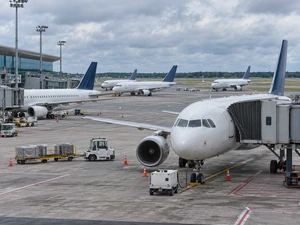
FAA Blames Aging Network for Nationwide Flight Halt
By Morgan Blake. Nov 18, 2026
The Federal Aviation Administration says aging telecommunications equipment became unstable amid a flood of network connection attempts, prompting a nationwide ground stop on November 13. In its November 15 account, the agency identified two possible sources of abnormal network traffic and said it was still investigating the cause.
The halt began around 3:30 p.m. Eastern time Friday. About 3,500 aircraft already airborne landed safely, according to the FAA, and restrictions were lifted at 8:15 p.m. But passengers still faced canceled flights, aircraft and crews out of position, and delays that carried into the weekend. The Department of Transportation reported that more than 8,000 flight operations resumed Friday evening.
A traffic surge destabilizes older equipment
The FAA said its older flight telecommunications system encountered roughly 1,000 connection attempts every four to five seconds. The surge destabilized equipment supporting communications and radar feeds. Investigators identified a radar facility in Amarillo, Texas, and a radio communications site in El Dorado, Arkansas, as two possible sources of the abnormal traffic.
L3Harris, the FAA’s network service provider, had been working at the Arkansas site, including installing a router. Blocking traffic from the two locations helped stabilize the system, the agency said. It also disabled a broadcasting function on newly installed routers and extended that precaution to approximately 60 similar devices.
The failed equipment belonged to a legacy network, not the SMART data-aggregation system, the FAA said. Investigators reported no indication of a cyberattack. The agency is continuing to determine what generated the excess connection attempts.
The FAA said maintenance at major facilities is usually performed overnight. Routine work at remote sites, however, had previously been carried out in daylight without disrupting the broader network. The agency plans to review those scheduling practices following the failure.
The instability began at 17 of the FAA’s 22 Air Route Traffic Control Centers and spread into several facilities that manage aircraft approaching and departing airports, the agency said. That reach helps explain why a problem involving two possible locations produced a national response.
It was not a complete loss of radio or radar service. Some frequencies and feeds remained reliable, allowing controllers to track aircraft and communicate with pilots. The FAA said emergency, law-enforcement and military flights continued, while established procedures allowed aircraft already in the air to land.
Flights resume, but disruptions continue
The FAA recorded approximately 12,462 flight cancellations on November 13, including 9,082 by major airlines. The agency cautioned that those totals were not all necessarily caused by the ground stop. Even after the airspace reopened, aircraft and crews had to be repositioned and carriers had to rebuild schedules.
Passengers were urged to check directly with their airlines for updated departures and connections. Reopening the airspace allowed flights to move again, but did not immediately put displaced crews and aircraft back where they were needed.
The FAA and L3Harris are continuing to investigate the source of the excess traffic. Alongside the router safeguards, the agency said it would reconsider when routine replacement work at remote sites should take place.
References: Nationwide Ground Stop: Questions and Answers | ICYMI: U.S. Transportation Secretary Sean P. Duffy Provides Update on Restoration of Airspace Following Nationwide Ground Stop

The News Command team was assisted by generative AI technology in creating this content
Trending






Read More


Read More

Read More


Read More


Read More


Read More

Read More


Read More
Read More

Read More

Read More

Read More

Read More