
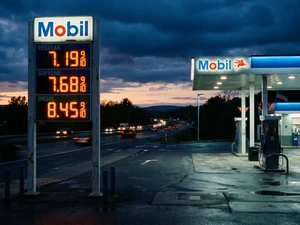
Gas Up 51%, Americans Cutting Everything Else
By Riley Monroe. Jun 2, 2026
Gas at $4.49: The Number That Changed Consumer Behavior
The national average for a gallon of regular gasoline reached $4.49 in May 2026, up from $2.98 one year earlier - a 51% increase, according to data reported by Fortune and the Associated Press. The jump is not just a fuel expense; it is functioning as a psychological and financial trigger that is reshaping how Americans spend across every other category.
Two-thirds of Americans reported cutting back on spending in response to price increases in May 2026, according to the Conference Board. The consumer confidence index fell to 93.1 - a level that economists associate with economic contraction rather than healthy expansion.
What People Are Cutting
The spending pullback is not limited to discretionary categories. Conference Board survey data shows Americans reducing spending on dining, entertainment, clothing, and travel - categories that typically absorb the first cuts when household budgets tighten. Gas at $4.49 per gallon means a 15-gallon fill-up costs roughly $67.35, compared to $44.70 one year ago. That $22.65 difference, multiplied across multiple fill-ups per month, is money that is no longer available for other spending.
The behavioral response - cutting broadly rather than absorbing the gas increase through savings - reflects the fact that savings buffers for many households have already been depleted through the inflation cycle of the past two years.
Inflation and the Wage Problem
Real wages - earnings adjusted for inflation - fell in April 2026 for the first time in three years. The reversal is significant: for much of 2024 and 2025, wage growth had outpaced inflation, providing a modest cushion. That cushion is now gone.
The combination of rising gas prices, elevated headline inflation, and falling real wages creates a compounding squeeze. Each individual factor would be manageable in isolation; together, they are producing the broad-based spending contraction that the Conference Board data captures.
The Consumer Confidence Signal
A Conference Board reading of 93.1 is not a crisis number, but it is a caution signal. Readings in the 90s are historically associated with periods in which consumer spending - which drives approximately 70% of U.S. economic activity - slows meaningfully. Two-thirds of Americans saying they are cutting back is not a marginal finding; it is a majority behavioral signal that, if sustained, produces measurable effects in retail, restaurant, and entertainment sector revenues.
The gas price spike is the most visible single factor driving the current contraction, but the broader inflationary context means the spending pullback is unlikely to reverse simply if gas prices stabilize. The confidence that was lost over two years of price pressure does not return quickly.
References: US retail sales consumer spending April 2026 | Gas prices inflation consumer spending cuts wages | Americans cut spending due to higher gas prices

The News Command team was assisted by generative AI technology in creating this content
Trending
Read More

Read More

Read More

Read More

Read More

Read More

Read More

Read More

Read More
Read More

Read More
Read More

Read More

Read More

Read More

Read More

Read More

Read More

Read More

Read More

Read More

Read More

Read More

Read More