
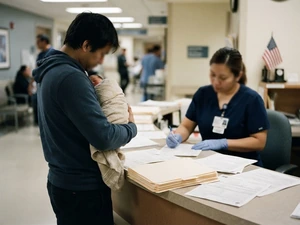
The Birthright Citizenship Order Was Narrowed. A Judge Still Blocked It
By Jordan Mercer. Sep 2, 2026
The New Order Was Narrower. The Result Was the Same.
The White House rewrote its approach to birthright citizenship after losing at the Supreme Court in June. A federal judge has now blocked the narrower version too.
U.S. District Judge Deborah Boardman issued a preliminary injunction on Sept. 2 stopping enforcement of an August executive order that sought to deny automatic citizenship to several more limited categories of children born in the United States. The ruling keeps the policy from taking effect while a class-action lawsuit continues.
This Was Not the Same Order the Supreme Court Rejected
The administration’s first effort broadly targeted children born in the United States to parents who were undocumented or in the country temporarily. The Supreme Court ruled against that approach on June 30.
The Aug. 6 replacement was narrower. It focused on categories including children whose parents are classified as alien enemies, certain foreign government employees, and cases in which a parent allegedly used a commercial arrangement to obtain U.S. citizenship through a birth in the country.
The Court Pushback Focused on Who Gets to Define the Exceptions
The administration argues that the Constitution has never treated every birth on U.S. soil identically and points to historically recognized exceptions, including children of diplomats and enemy forces. Its new order attempted to define additional situations it says fall outside birthright citizenship.
The plaintiffs argue that the president cannot expand those exceptions on his own. According to AP and CBS News, Boardman concluded that the challengers had shown enough likelihood of success to justify blocking the order before families could lose recognition of citizenship under it.
The Order Also Raised a Practical Problem
One disputed phrase is the attempt to reach parents who engaged in a commercial transaction connected to obtaining citizenship through birth. Challengers argued that language could sweep much more broadly than organized birth-tourism businesses and create uncertainty for ordinary travel or medical arrangements.
The administration responded that agencies were still developing implementation guidance and argued the lawsuit came too early. Boardman rejected that timing argument and allowed the challenge to proceed before enforcement began.
The Legal Fight Has Moved From a Broad Ban to the Edge Cases
The preliminary injunction is not a final ruling on every category in the order. It is a temporary block while the litigation continues, and the administration can appeal.
But the sequence is now unusually clear. The Supreme Court rejected the broad version. The White House returned with a narrower version built around claimed exceptions. Before that version could take effect, another federal court stopped it too. The next fight is no longer over whether birthright citizenship exists. It is over how far a president can stretch the exceptions around it.
References: A judge blocks Trump’s new bid to curb birthright citizenship, citing Supreme Court precedent | Judge blocks Trump’s latest effort to narrow birthright citizenship | Continuing to Protect the Meaning and Value of American Citizenship

The News Command team was assisted by generative AI technology in creating this content
Trending





Read More


Read More

Read More


Read More



Read More


Read More

Read More

Read More

Read More

Read More

Read More

Read More

Read More

Read More