
Airlines and USPS Add Fees as Fuel Costs Rise
By Avery Collins. Apr 20, 2026
Starting in early April 2026, a series of fee increases began taking effect across American air travel and shipping services - each one linked, directly or indirectly, to the rise in fuel costs that followed the outbreak of the U.S.-Israeli conflict with Iran in late February. The changes were announced separately by individual companies, but together they signal a broad shift in how American businesses are handling elevated energy expenses.
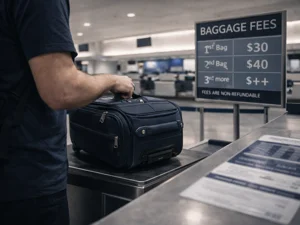
United Airlines, Delta, JetBlue, and Southwest all raised checked baggage fees in the weeks following the start of the conflict, citing higher operating costs, according to CNN Business reporting published April 7. United and Delta both moved to $45 for a first checked bag and $55 for a second - increases of $10 per item. JetBlue’s increases varied by flight timing, with peak-season fees rising from $40 to $49 for a first bag. Southwest raised its first bag fee from $35 to $45 and its second from $45 to $55.
The Scale of the Fuel Problem
Jet fuel costs have spiked 95% since the conflict began, according to the Argus US Jet Fuel Index published by Airlines for America, as reported by CNN. United Airlines CEO Scott Kirby spelled out the exposure in a March employee memo: jet fuel at current prices would add an estimated $11 billion in annual cost for the airline - more than double United’s best-ever annual profit.
Beyond the fee increases, United also warned that approximately 5% of its planned routes may be cut over the next two quarters as a cost-reduction measure. American Airlines acknowledged it was reviewing capacity in response to higher fuel costs, according to CNN Business reporting. No airline specified whether the baggage fee increases would be temporary or permanent.
Amazon and the Shipping Chain
The fee increases extended beyond air travel. Amazon announced a temporary 3.5% fuel and logistics surcharge for third-party sellers using its fulfillment and return services, effective later in April, according to CNN. Amazon said those sellers shipped more than 80 billion products through its system last year. The company did not specify the conditions under which the surcharge would be removed, stating it would remain in place for the foreseeable future.
Established shipping carriers were already operating under elevated fuel charges that had triggered automatically. As of early April, FedEx was applying a 26.5% fuel surcharge on ground and home deliveries - a figure that rises on a sliding scale tied to national diesel prices, according to CNN Business reporting. Maersk and other major international shippers have also added emergency bunker surcharges tied to higher costs from longer routing around disrupted Middle East corridors.
The Post Office Enters the Picture
The U.S. Postal Service moved into new territory on March 25 when it announced its first-ever fuel surcharge on packages - an 8% fee set to take effect April 26, according to CNN. The surcharge applies only to packages, not letter mail, and the USPS stated it would remain in place through at least January 17, 2027. A McKinsey supply chain expert told CNN that businesses often absorb higher costs initially through efficiency measures before eventually passing them along in subtler ways - through higher free-shipping minimums, smaller package sizes, or reduced discounts.
What Consumers Are Now Paying
The practical effect for American households is accumulating across multiple fronts. Travelers checking bags are paying $10 more per item on most major carriers. Packages shipped through USPS will carry the new surcharge starting this month. Online retail prices may shift as third-party Amazon sellers respond to their own cost increases. And fuel prices at the pump remain significantly elevated, with the national average sitting above $4 per gallon as of mid-April, according to AAA data cited by CNN.
The McKinsey analyst’s observation - that cost absorption tends to be followed by cost transfer - suggests the visible fee announcements of early April may be the leading edge of a broader repricing cycle. How long that cycle continues depends largely on how long the disruption to global oil supply persists.
References: Beyond gas: The price increases American consumers are experiencing from the Iran war | Gas prices and saving tips amid Iran war

The News Command team was assisted by generative AI technology in creating this content
Trending





Read More

Read More

Read More


Read More



Read More

Read More

Read More

Read More

Read More

Read More

Read More

Read More

Read More

Read More