
Gen Z's 'Chinamaxxing' Trend Signals a Shift in American Cultural Identity
By Morgan Blake. Apr 27, 2026
What Is Chinamaxxing
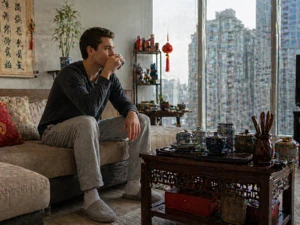
A trend called Chinamaxxing has moved from a niche corner of TikTok into a documented cultural moment with measurable economic, diplomatic, and generational dimensions. The term - drawn from internet slang in which maxxing means going fully into something - describes young Americans adopting selective Chinese lifestyle habits: drinking hot water in the morning instead of iced coffee, wearing slippers indoors, eating congee and slow-simmered soups, practicing traditional Chinese wellness routines, and expressing open admiration for Chinese urban infrastructure and technology. On TikTok and Instagram, creators document these shifts under the phrase, “You’ve met me at a very Chinese time in my life.”
The trend traces its origins to 2025, when American gaming streamer IShowSpeed toured China and broadcast his experience of its cities to millions of viewers. Chinese-American creator Sherry Zhu amplified it with sardonic tutorials on becoming a Chinese baddie - her term for a confident, self-possessed woman grounded in Chinese cultural habits. The mass migration of American users to Xiaohongshu, or RedNote, during the 2025 TikTok ban threat accelerated direct contact between American and Chinese internet communities at a scale that had no prior equivalent. The cross-pollination from that migration, according to Fortune, is a significant factor in how quickly Chinamaxxing moved from in-group meme to mainstream cultural conversation.
The Numbers Behind the Meme
The trend has produced tangible market signals. Traditional Chinese Medicine product sales in Western markets surged between 300 and 400 percent in the first quarter of 2026, according to early market reports cited by multiple outlets. Chinese language learning enrollment has risen among younger Americans. Travel interest in China has increased, prompting the Chinese ambassador to the U.S. to publicly cite the trend while advocating for expanded tourist visas. China’s state outlet Global Times has begun amplifying coverage of Chinamaxxing, and Chinese foreign ministry spokesperson Lin Jian welcomed the international interest in Chinese culture.
The economic and diplomatic attention reflects how far the trend has traveled from its origins. What began as a stylized lifestyle meme now registers in foreign policy coverage, academic soft power literature, and consumer market research. Reid Litman, a consulting director at Ogilvy who studies Gen Z behavior, told Fortune the trend does not represent a wholesale rejection of American identity but rather something more native to how this generation builds identity online: assembled, remixed, borrowed in phases. In his framing, “when someone says they’re in their very Chinese era, it’s not a geopolitical statement - it’s a signal of a phase, closer to trying something on than switching sides.”
A Mirror Pointed at America
Analysts and researchers consistently note that Chinamaxxing is less a love letter to China than a critique of conditions in the United States. Fortune reported the economic subtext clearly: a four-year U.S. public university costs $50,000 to $60,000 for in-state students; the comparable Chinese degree runs $3,000 to $5,000 total. American households spend an average of $5,177 annually on healthcare; China’s subsidized system costs a fraction of that. Housing consumes 25 to 35 percent of American paychecks. Gen Z Americans now carry an average of $94,000 in student loan debt. The viral clips of Chinese bullet trains, affordable street food, dense walkable cities, and communal domestic life are effective not because they are accurate in every detail, but because they map directly onto what young Americans report feeling structurally denied.
Yi-Ling Liu, a tech writer who covers the Chinese internet, told NPR that the fascination reveals deep anxieties at home: “Americans’ perspective of China has shifted.” Shaoyu Yuan, a scholar of Chinese soft power, described the trend to NPR as operating on two tracks simultaneously - one that highlights American dysfunction, and one that makes China look more attractive. Yuan noted that no external push was needed to generate the dysfunction footage: American potholes, emergency room bills, and aging infrastructure create it on their own.
A Divided Reception
The trend has drawn a significant backlash from members of the Chinese diaspora, who argue that Chinamaxxing reduces a complex, diverse culture to a set of aesthetic choices and wellness clichés. Cherie Wong, a Hong Kong Canadian activist, addressed the trend directly in an Instagram video: “In 2026, it’s apparently cool to be Chinese. But before white people claim they’re drinking hot water and they’re in a very Chinese time, I need you to stop.” Wong told NPR she worries that even well-meaning creators end up reproducing simplified narratives about a country whose history includes far more than its most photogenic contemporary infrastructure.
Creator Sherry Zhu, one of the figures credited with amplifying the trend, has also expressed concern. She told NPR she does not want people to forget where the cultural practices being adopted actually come from, or to strip them of the context that gives them meaning. The tension between genuine curiosity, aesthetic borrowing, and cultural flattening is, by most accounts, unresolved. Yuan offered a measured assessment: superficial trends can lower the temperature between cultures whose governments are in active geopolitical competition. Whether Chinamaxxing eventually functions as cultural diplomacy or cultural reduction may depend entirely on what its participants choose to do with it next.
References: What Is Becoming Chinese Chinamaxxing Tiktok Trend American Critique | Chinamaxxing Gen Z Word Of Week | What Is Chinamaxxing Meet Gen Z New Trend China 11587704

The News Command team was assisted by generative AI technology in creating this content
Trending





Read More
Read More

Read More

Read More

Read More

Read More
Read More

Read More
Read More
Read More
Read More

Read More

Read More

Read More