
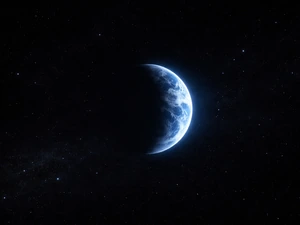
Artemis II Astronauts Witness the Moon's Hidden Side
By Avery Collins. Apr 6, 2026
The four Artemis II astronauts are preparing to become the first humans to view portions of the moon’s far side with the naked eye, as the Orion capsule approaches the lunar flyby scheduled for April 6, 2026, according to CBS News and NBC News. By the morning of April 5 - the mission’s fourth day in space - the crew was confirmed closer to the moon than to Earth, a milestone relayed to them live by a spacecraft communicator at Johnson Space Center in Houston. Mission specialist Christina Koch told CBS News the crew had been watching the moon grow steadily larger through the capsule windows.
“It is a beautiful sight,” Koch said in an interview with CBS News. “We’re seeing more and more of the far side, and it’s just a thrill to be here.” The lunar flyby period, scheduled to last approximately six hours, begins at 2:45 p.m. EDT on April 6. During that window, the crew is expected to come within 4,000 to 6,000 miles of the lunar surface.
What They Will See - and Why It Matters
The moon’s far side always faces away from Earth because the moon’s rotation is synchronized with its orbit. Apollo astronauts flew behind the moon on their missions, but the timing and paths of those flights meant most of the far side remained in darkness. For Artemis II, NASA confirmed that approximately 21% of the far side will be in sunlight during the flyby, giving the crew a direct view of portions of the lunar surface that have never been observed by human eyes, according to CBS News.
The crew trained for three years with mission scientists to prepare for the six-hour observation window, and each astronaut was assigned roles for photography and data recording during the flyby. Koch described it to NBC News as “a highly choreographed dance” of who holds cameras and who supports those capturing images and observations. NASA said data gathered during the flyby will inform future Artemis missions, including the 2028 landing.
Crew Reflections from Deep Space
At approximately 252,757 miles from Earth - the farthest humans have traveled since the Apollo 13 mission in 1970 - the four crew members have described the experience in terms of scale and perspective. Pilot Victor Glover, speaking to CBS News on April 4, described looking out at the cosmos and understanding Earth as an “oasis” in an otherwise empty universe. “You have this beautiful place where we get to exist together,” he said. Commander Reid Wiseman told mission control that morale aboard the Orion capsule was high and that the sight of a crescent Earth through the windows was “truly a remarkable sight.”
Koch reflected on the view of Earth alone in the blackness of space, telling CBS News it struck her as an anomaly worth protecting. The crew spent part of April 4 - Easter Sunday - speaking with family members via video call from space, which Wiseman described as one of the highlights of the mission so far.
Mission Status and Return
The Artemis II crew has worked through several minor technical issues during the flight, including intermittent problems with the Orion capsule’s waste management system, which NASA’s Mission Management Team chairman described as a manageable situation. All critical life-support and propulsion systems have functioned normally, according to CBS News. The mission is on track for a Pacific Ocean splashdown off the coast of San Diego on April 10. NASA Administrator Jared Isaacman confirmed on CBS News’s Face the Nation on April 5 that gathering life-support data from this flight remains the mission’s primary technical objective, as Orion’s systems are being flown with a human crew for the first time.
References: ‘Not the moon that I’m used to seeing’: Artemis II astronauts describe seeing the far side | Moon-bound Artemis II crew reflects on wonder of deep space experience

The News Command team was assisted by generative AI technology in creating this content
Trending

Read More

Read More

Read More

Read More

Read More

Read More

Read More

Read More

Read More

Read More

Read More

Read More

Read More

Read More

Read More

Read More

Read More

Read More

Read More

Read More

Read More

Read More

Read More

Read More