
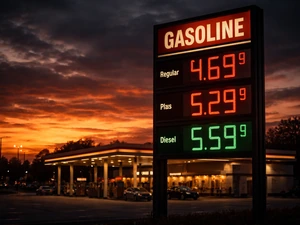
Iran War Drives Fuel to Highest Price Since 2022
By Riley Monroe. Apr 2, 2026
Drivers noticed it first at the pump: The national average price of gasoline crossed $4 per gallon on April 1, 2026 - for the first time since 2022 - per NBC News reporting. The milestone followed weeks of escalating disruption to global oil supply caused by the U.S.-Iran war and the effective closure of the Strait of Hormuz - the waterway through which approximately 20% of the world’s oil and liquefied natural gas had transited before the conflict began. Data from the International Monetary Fund cited by NBC News showed that daily vessel traffic through the strait had dropped from more than 100 ships before the fighting to fewer than five.
The week of April 2, the national average reached $4.01 per gallon, up from $3.93 the prior week, according to finder.com’s tracking of Energy Information Administration data. States including Florida, Tennessee, and Texas saw the sharpest week-over-week increases, while a handful of Midwest states recorded modest price relief.
How the Strait Became the Price Driver
Iran’s grip on the Strait of Hormuz is the central mechanism. By limiting transit through the passage, Iran effectively removed millions of barrels of oil and liquefied natural gas from global markets, according to NBC News. Beyond the strait, tit-for-tat strikes on energy infrastructure across Gulf Arab states further tightened supply. Israel struck Iran’s South Pars gas field in late March, triggering retaliatory Iranian attacks on energy sites in Qatar and neighboring countries, according to NBC News reporting at the time.
Oil markets responded sharply. U.S. crude rose to more than $111 per barrel following President Trump’s national address - its largest single-day increase in six years - while Brent crude surged nearly 80% for the year, per NBC News. The rising cost of crude fed directly into gasoline and diesel prices at American pumps within days.
Jet Fuel, Airlines, and the Downstream Chain
The fuel shock extended almost immediately into the transportation sector. Jet fuel costs surged 85% from the day before the war began, reaching a record $4.62 per gallon, according to data from Argus cited by Airlines for America and reported by NBC News. JetBlue announced higher baggage fees, citing rising operating costs. United Airlines said it would cut approximately 5% of planned flights in off-peak periods during the second and third quarters of 2026. American Airlines CEO Robert Isom said the industry was actively managing capacity in response to pricing pressure.
Most major U.S. carriers stopped hedging fuel costs years ago, leaving them fully exposed to the current price environment. Travel demand has remained steady, per NBC News, with January and February ticket sales near records - but analysts noted that continued fare increases could begin dampening that demand in the months ahead.
What the Administration Said, and What Forecasters Show
President Trump told NBC in a weekend interview that he expected gas prices to fall below pre-war levels once the conflict was resolved. National Economic Council director Kevin Hassett told CBS that futures markets pointed toward a rapid end to the situation. The Energy Information Administration projected, however, that even assuming Strait of Hormuz transit resumed in April 2026, prices were unlikely to fall below $3 per gallon before the end of 2027, according to Fortune’s reporting of EIA forecasts.
Where Prices Stand Now
As of the week ending April 2, the national average sat at $4.01 per gallon, according to EIA data tracked by finder.com - roughly $0.95 above the six-year national average of $3.06. The EIA’s next weekly fuel price release is scheduled for April 7. Whether and when Strait of Hormuz traffic resumes remains the primary variable shaping how quickly retail fuel costs begin to moderate.
References: Iran war live updates: Trump tells allies to ‘get your own oil’ from Strait of Hormuz amid price hikes | The world economy is experiencing the most severe oil shock in decades. The worst could still be on the way.

The News Command team was assisted by generative AI technology in creating this content
Trending

Read More

Read More

Read More

Read More

Read More

Read More

Read More

Read More

Read More

Read More

Read More

Read More

Read More

Read More

Read More

Read More

Read More

Read More

Read More

Read More

Read More

Read More

Read More

Read More