
NASA Turns the Space Station Into a Yogurt Lab for Mars
By Jordan Mercer. Mar 2, 2026

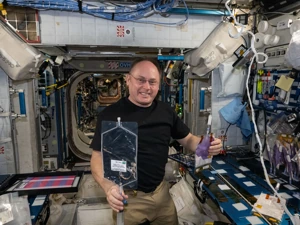
NASA astronauts aboard the International Space Station fermented yogurt
samples as part of the agency's BioNutrients-3 experiment — a study
designed to test whether living microorganisms can produce vitamins and
nutrients on demand during long-duration spaceflight, according to
NASA's official press release. The samples returned to Earth on
February 26, 2026, aboard SpaceX's Dragon capsule as part of the CRS-33
cargo mission, and are now being analyzed at NASA's Ames Research
Center in California.
The experiment addresses one of the most fundamental challenges of
deep-space human missions: how to keep crews nutritionally healthy over
years-long journeys when resupply from Earth is impossible. Vitamins
degrade in packaged food over time, and a Mars mission lasting two to
three years would require a nutritional solution that does not depend on
sealed rations packed before departure, according to Daily Galaxy.
How the Experiment Works
BioNutrients-3 is the latest in a series of NASA experiments exploring
biological food production in space. The core concept involves using
engineered microorganisms — in this case, the same bacterial cultures
used to ferment yogurt on Earth — to produce specific vitamins and
nutrients on demand in microgravity. Crew members mixed the bacterial
cultures with a growth medium inside sealed pouches, then stored the
pouches at controlled temperatures to allow fermentation to proceed.
The question NASA's Ames researchers are now working to answer is how
microgravity and space radiation affect the fermentation process —
specifically whether the bacteria behave differently in orbit than on
Earth and whether the nutritional output of the fermentation is
consistent across multiple cycles, according to NASA. If the bacteria
can reliably produce target nutrients in space conditions, the
technology could eventually allow crews to grow vitamins mid-mission
rather than carrying fixed supplies.
Implications for Mars and Beyond
The Mars transit alone — one way — takes approximately seven months
under optimal orbital conditions. A full mission, including surface time
and return transit, would span roughly two to three years. At that
timescale, pre-packaged food vitamins — particularly vitamin C,
vitamin K, and several B vitamins — degrade to levels below
recommended daily intake, creating real nutritional risk for crew
members, according to Daily Galaxy.
NASA's BioNutrients program, which began with earlier ISS experiments,
is building toward a compact, self-sustaining biological system that
future crews could carry aboard a Mars transit vehicle. The system would
require minimal weight, energy, and crew time — and would produce
fresh nutritional supplements throughout the mission without any
resupply. The yogurt experiment is one step in validating that the
biological processes required can function reliably outside Earth's
gravity and magnetic protection.
A Broader Context: Food in Space
The BioNutrients-3 results will be published after analysis at Ames
Research Center is complete. NASA has described the experiment as part
of a broader research portfolio exploring biological manufacturing in
space — a category that also includes experiments in plant growth,
synthetic biology, and engineered yeast that can produce pharmaceuticals
on demand. Together, these experiments are building the scientific
foundation for what NASA describes as in-situ resource utilization: the
ability to manufacture critical supplies during a mission rather than
carrying everything from Earth.
For now, the yogurt fermented 250 miles above Earth has returned home.
The bacteria that made it will be examined carefully to determine
whether the final frontier is a suitable place to make lunch.
References: Nasa Study To Analyze Fermented Food Samples From Space | Nasa Space Yogurt Lab Mars Astronauts

The News Command team was assisted by generative AI technology in creating this content
Trending
Read More

Read More

Read More

Read More

Read More

Read More

Read More

Read More

Read More

Read More
Read More

Read More
Read More

Read More

Read More

Read More
Read More

Read More
Read More

Read More

Read More

Read More
Read More

Read More