AI Breakthroughs Enable Early Detection of Multiple Cancer Types
By Avery Collins. May 11, 2026
Two remarkable breakthroughs in artificial intelligence are transforming the landscape of cancer detection and early diagnosis, offering hope for improved patient outcomes across multiple cancer types. Researchers have developed machine learning systems capable of identifying cancerous growths with accuracy approaching or exceeding that of experienced human physicians.
Dr. Aadel Chaudhuri and Dr. Ajit Goenka, leading researchers in the field, discussed these advances in a CNN interview released May 6, 2026. Their work represents a significant convergence of computational power, medical imaging, and algorithmic sophistication that is reshaping how medical institutions approach cancer screening.
The Impact on Patient Outcomes
Early cancer detection has long been recognized as critical to treatment success and patient survival rates. Cancers identified in early stages are generally more treatable, with higher cure rates and less invasive treatment options available. These AI breakthroughs promise to push the frontier of early detection further back, identifying cancerous changes before symptoms emerge.
The technology has been tested across multiple cancer types, demonstrating broad applicability. Researchers are moving from proof-of-concept trials to real-world clinical integration, with several major medical institutions beginning to incorporate these AI systems into their screening protocols.
How the Technology Works
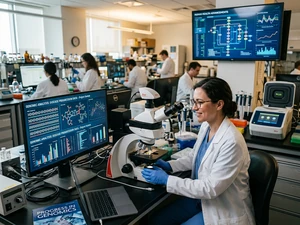
The AI systems analyze medical imaging-X-rays, CT scans, mammograms, and other diagnostic images-with systematic precision. The algorithms have been trained on millions of images, learning to identify subtle patterns associated with malignancy that human reviewers might miss.
Unlike human radiologists, who experience fatigue and variable performance across different examination sessions, AI systems provide consistent analysis. They can flag suspicious areas for human physician review, essentially serving as an additional set of highly trained eyes examining each image.
The Path to Implementation
Hospitals and medical centers are beginning to integrate these AI systems into routine screening protocols. The technology does not replace human physicians but rather augments their capabilities, allowing radiologists and oncologists to focus on complex cases while the AI handles initial analysis and flagging of likely abnormalities.
Medical schools and residency programs are adapting their curricula to include AI literacy and understanding of how to work effectively with machine-learning systems. The future of medical practice involves human physicians and artificial intelligence working in complementary partnership.
Broader Implications
This advancement in cancer detection represents a larger transformation in medical practice. Machine learning is being applied to disease diagnosis across multiple medical specialties. The success of AI in cancer detection is spurring similar research in cardiology, neurology, and other fields where imaging interpretation is central to diagnosis.
The economic implications are also significant. Earlier detection can reduce overall healthcare costs by enabling less expensive treatment options. Institutional healthcare systems are recognizing the potential for both improved patient outcomes and economic efficiency from these AI breakthroughs.
Challenges and Next Steps
Researchers acknowledge several challenges remaining. The AI systems must be validated across diverse populations to ensure equitable performance across racial and ethnic groups. Privacy and data security in medical AI systems must be rigorously maintained. Regulatory pathways for approving AI-based medical devices continue to evolve.
Despite these challenges, the trajectory is clear: artificial intelligence is fundamentally changing cancer detection and early diagnosis, offering patients better outcomes through earlier intervention and more effective treatment planning.
References: Two incredible breakthroughs in early cancer detection made possible by AI

The News Command team was assisted by generative AI technology in creating this content
Trending

Read More
Read More

Read More

Read More

Read More
Read More

Read More
Read More

Read More

Read More

Read More

Read More

Read More

Read More

Read More

Read More

Read More

Read More
Read More

Read More